
Some people are born with one or more toes that are noticeably longer than the others. A long toe takes the full pressure of the shoe, bends to fit, and over time can turn into a hammer toe with painful corns. Toe shortening surgery reduces the length of the toe so it sits in line with its neighbours and fits normal footwear.
Morton’s toe and long toes
The most common pattern is Morton’s toe, where the second toe is longer than the big toe. Others have long second, third and fourth toes together. Typical problems include:
- pressure and bruising at the end of the toe, especially in narrow or heeled shoes
- the toe buckling into a hammer toe or claw toe
- corns on the tip or knuckle of the toe
- thickened or damaged toenails
- feeling self-conscious about the appearance of the toes in sandals
Morton’s toe should not be confused with Morton’s neuroma, a nerve problem in the ball of the foot.
How toe shortening surgery works
The operation is called a shortening osteotomy. A small section of bone is removed from the toe – or the small end joint is removed – so the toe becomes shorter. The bone ends are then held together while they heal, either with a fine temporary wire or with a small internal screw or implant.
When the long toe has also become bent, shortening and hammer toe correction are carried out together, so the toe ends up both straight and the right length. Where several toes are long, Mr Nazir plans the lengths to restore a natural, gradually descending line of toes.
Suitable cases can be performed with keyhole techniques, using very small incisions.
Toe shortening before and after
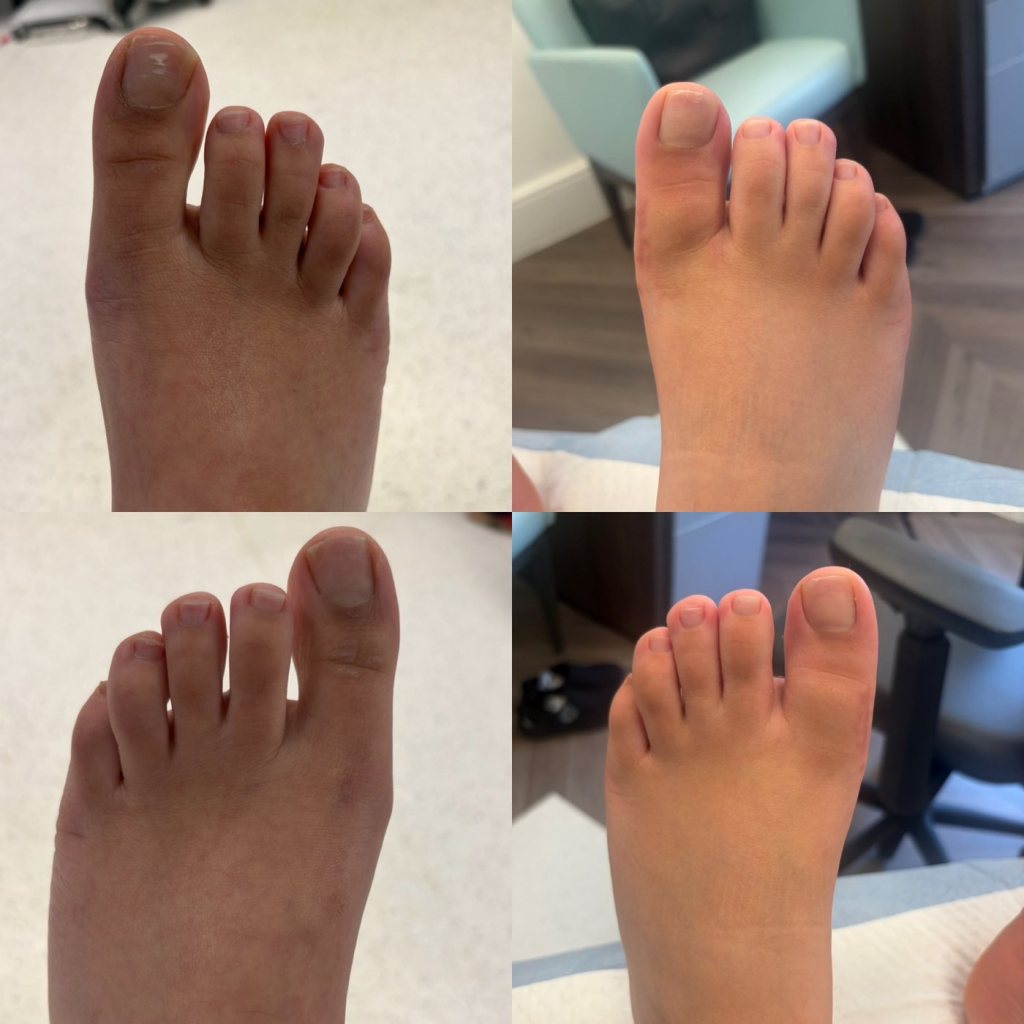
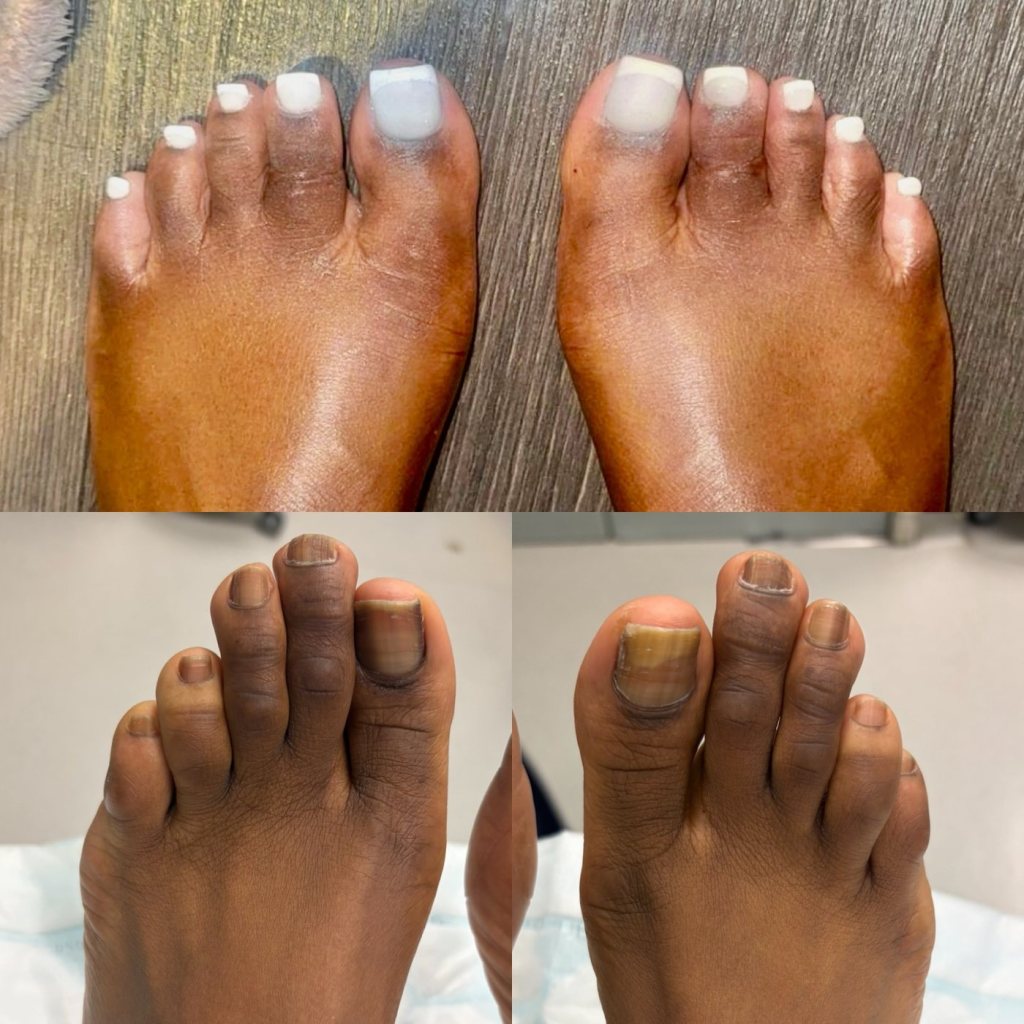
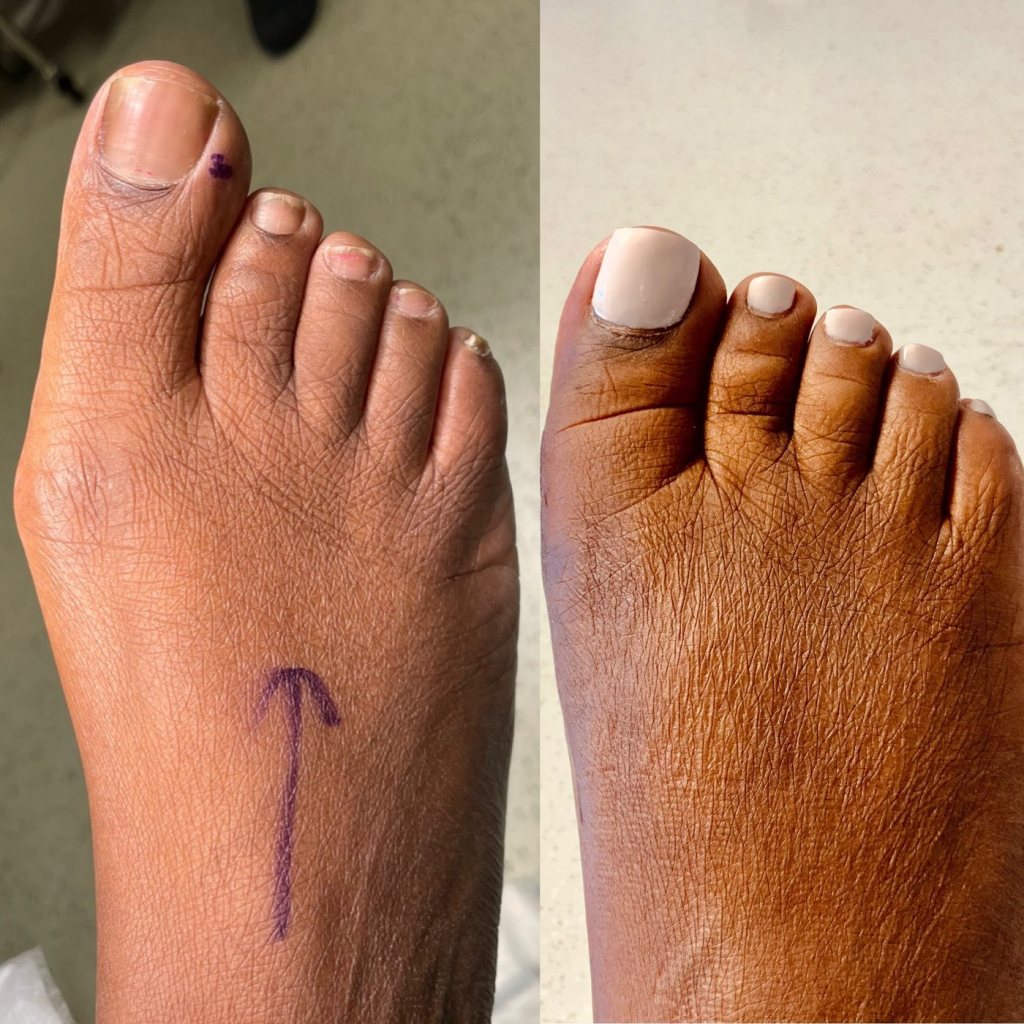
Photographs of Mr Nazir’s patients, shared with their consent. Every foot is different and individual results vary.
Medical or cosmetic?
Toe shortening is most often done because a long toe is causing pain, corns, nail damage or deformity. Some patients mainly want a more balanced appearance. Mr Nazir will discuss your goals frankly, explain what is realistic for your foot, and advise against surgery where the risks outweigh the expected benefit. Purely cosmetic procedures are not usually covered by insurance.
Recovery after toe shortening
- Day surgery – you go home the same day in a post-operative shoe.
- Weeks 0–2: rest with the foot elevated, walking only short distances.
- Weeks 2–6: with screw fixation, return to supportive trainers is often possible sooner; with wire fixation, the post-operative shoe is worn until the wire is removed at about five to six weeks.
- Week 6 onwards: bone healing allows a gradual return to exercise.
- 6–16 weeks: swelling continues to settle; the final appearance can take four months or longer.
See the full toe surgery recovery guide.
Risks
Possible complications include infection, prolonged swelling, delayed or non-healing of the bone, the toe healing slightly out of position, a toe that does not touch the ground (“floating toe”), scar sensitivity, the need to remove a screw, blood clots and, rarely, complex regional pain syndrome.
Toe shortening surgery FAQs
Can you shorten toes without surgery?
No. Footwear and padding can ease discomfort, but surgery is the only way to make a toe permanently shorter.
How much shorter can a toe be made?
Typically a few millimetres – enough to bring the toe into line. Mr Nazir uses X-rays to plan the exact amount.
Can both feet be done at the same time?
Often, yes, particularly with keyhole techniques. Some patients prefer one foot at a time to keep a “good” foot for walking during early recovery.
How much does toe shortening cost?
The fee depends on the number of toes and whether one or both feet are treated. You will receive a written estimate after your consultation. See toe surgery costs.
Make an enquiry
Leave your details and the team will get back to you, usually within one working day. Or book a consultation online.
Thank you for your enquiry
Your details are used only to respond to your enquiry, in line with our privacy policy. Please do not use this form for urgent medical concerns; in an emergency call 999.

