Claw toe, mallet toe and hammer toe are often confused because they look similar. The difference is which joint of the toe is bent – and that decides which treatment will work.
Claw toe vs hammer toe vs mallet toe
Each small toe has three joints: one at the base where it meets the foot, one in the middle, and one near the nail.
- Hammer toe – bent down at the middle joint. The knuckle rubs on the top of the shoe. See hammer toe surgery.
- Claw toe – bent up at the base joint and down at both the middle and end joints, so the toe curls like a claw. It often affects several toes at once and causes pain on the top of the toe, at the tip and under the ball of the foot.
- Mallet toe – bent down only at the end joint, so the tip of the toe presses into the sole of the shoe. A painful corn often forms at the tip, and the nail may thicken.
What causes claw toes and mallet toes?
- an imbalance between the muscles and tendons that straighten and bend the toes
- a long toe that is pushed back by footwear (see toe shortening)
- a high-arched foot, which changes the pull of the toe tendons
- bunions crowding the lesser toes
- inflammatory arthritis, such as rheumatoid arthritis
- nerve conditions, including diabetic neuropathy, particularly for claw toes
- injury to the toe or to the ligament under the toe joint
Because claw toes can be linked to nerve or muscle conditions, Mr Nazir will check for an underlying cause before planning treatment.
Non-surgical treatment
- shoes with a deep, wide toe box and low heel
- silicone toe protectors and crest pads
- custom insoles to off-load the ball of the foot
- regular care of corns and hard skin by a podiatrist
- stretching exercises for a toe that is still flexible
These steps relieve symptoms but do not reverse a fixed deformity.
Claw toe surgery
Claw toe correction usually addresses both the base joint and the middle joint. Depending on the toe, it may combine:
- release or lengthening of the tight tendon on top of the toe
- straightening of the middle joint by arthroplasty or fusion
- tendon transfer to hold the toe down at the base
- a small shortening of the metatarsal bone when the base joint is dislocated
Where several toes are clawed, they can be corrected in one operation.
Claw toe surgery before and after
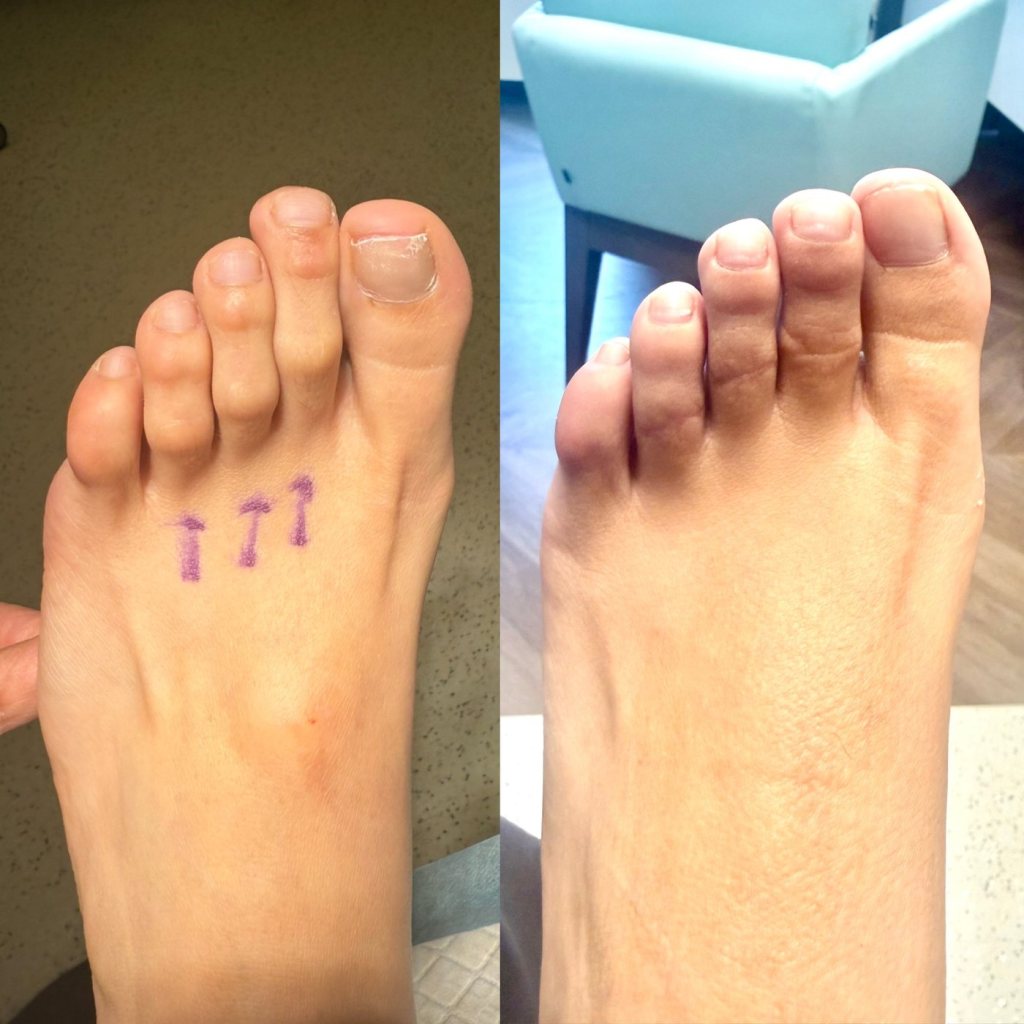
Photographs of Mr Nazir’s patients, shared with their consent. Every foot is different and individual results vary.
Mallet toe surgery
Mallet toe surgery is usually a smaller procedure on the end joint of the toe. Options include releasing the tight tendon underneath for a flexible toe, or removing or fusing the end joint for a stiff one. Many mallet toes are suitable for a keyhole approach.
Recovery
Both are day-case operations. You walk in a post-operative shoe straight away and rest with the foot raised for the first two weeks. Most people are back in trainers between two and six weeks, depending on the technique, with swelling settling over the following months. Read the full recovery guide.
FAQs
Is claw toe worse than hammer toe?
Claw toe involves more joints and often several toes, so surgery may be more extensive. Both respond well to correction when the cause is addressed.
Can a mallet toe be fixed without surgery?
Padding and footwear can reduce pain from the corn at the tip of the toe, but a fixed mallet toe will not straighten without surgery.
Will insurance cover claw or mallet toe surgery?
Correction of a painful toe deformity is generally covered by UK private medical insurers. Check your policy and obtain pre-authorisation. See costs and insurance.
Make an enquiry
Leave your details and the team will get back to you, usually within one working day. Or book a consultation online.
Thank you for your enquiry
Your details are used only to respond to your enquiry, in line with our privacy policy. Please do not use this form for urgent medical concerns; in an emergency call 999.

