
A hammer toe bends downwards at the middle joint, so the knuckle rises and rubs against the top of the shoe. It most often affects the second toe, and frequently develops alongside a bunion. Hammer toe surgery straightens the toe permanently, removes the pressure that causes corns and pain, and makes ordinary footwear comfortable again.
Signs you may have a hammer toe
- a raised knuckle on the second, third or fourth toe
- a painful corn or callus on top of the toe or at its tip
- pain in the ball of the foot under the base of the toe
- the toe no longer straightens when you push it flat (a rigid hammer toe)
- difficulty finding shoes deep enough at the front
Do I need surgery?
Not always. A flexible hammer toe – one that still straightens when pressed – can often be managed with wider, deeper shoes, toe protectors, insoles and padding. These measures ease symptoms but do not correct the bend.
Surgery is worth considering when pain persists despite sensible footwear, the toe has become stiff, corns keep returning, or the deformity is worsening. Correcting a hammer toe while it is still flexible usually allows a smaller operation.
Types of hammer toe surgery
Mr Nazir tailors the operation to how stiff the toe is, which joints are involved and whether a bunion or ligament injury is contributing.
Keyhole (minimally invasive) hammer toe correction
Through incisions of a few millimetres, the bone and tight soft tissues are adjusted under X-ray guidance. Suitable toes can often be corrected without metal pins protruding from the toe. See keyhole toe surgery.
Arthroplasty
A small piece of bone is removed from the joint so the toe can lie straight, while keeping some movement. Most patients return to work at around two weeks.
Fusion (arthrodesis) with an implant
The affected joint is removed and the two bones are joined with a small internal implant so the toe heals straight. Because nothing protrudes from the toe, many patients return to closed shoes and work at about two weeks.
Fusion with wires
The traditional method holds the toe straight with a fine wire that comes out of the tip of the toe and is removed in clinic at four to six weeks. It remains a reliable option for some toes.
Tendon and ligament procedures
Tight tendons may be released or transferred, and a torn plantar plate (the ligament under the base of the toe) can be repaired to stop the toe lifting or drifting.
Hammer toe surgery before and after
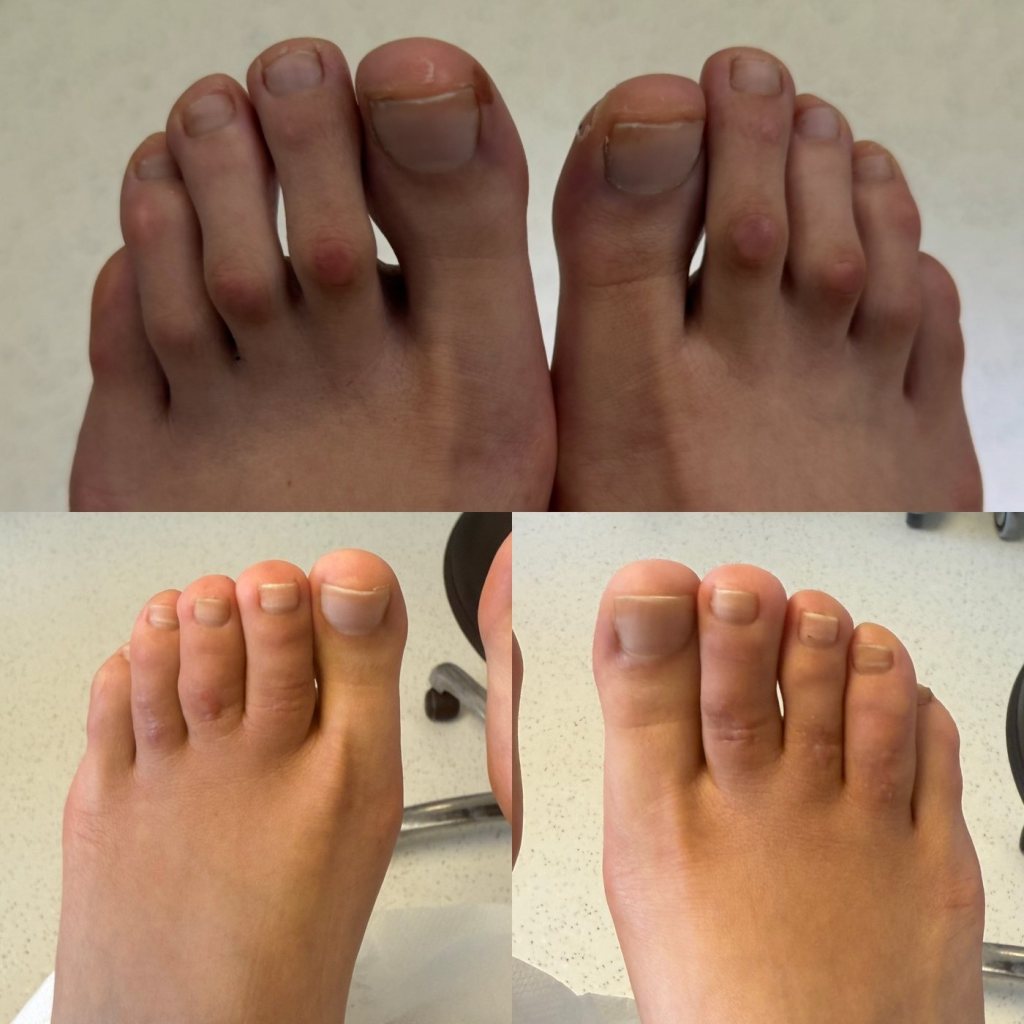
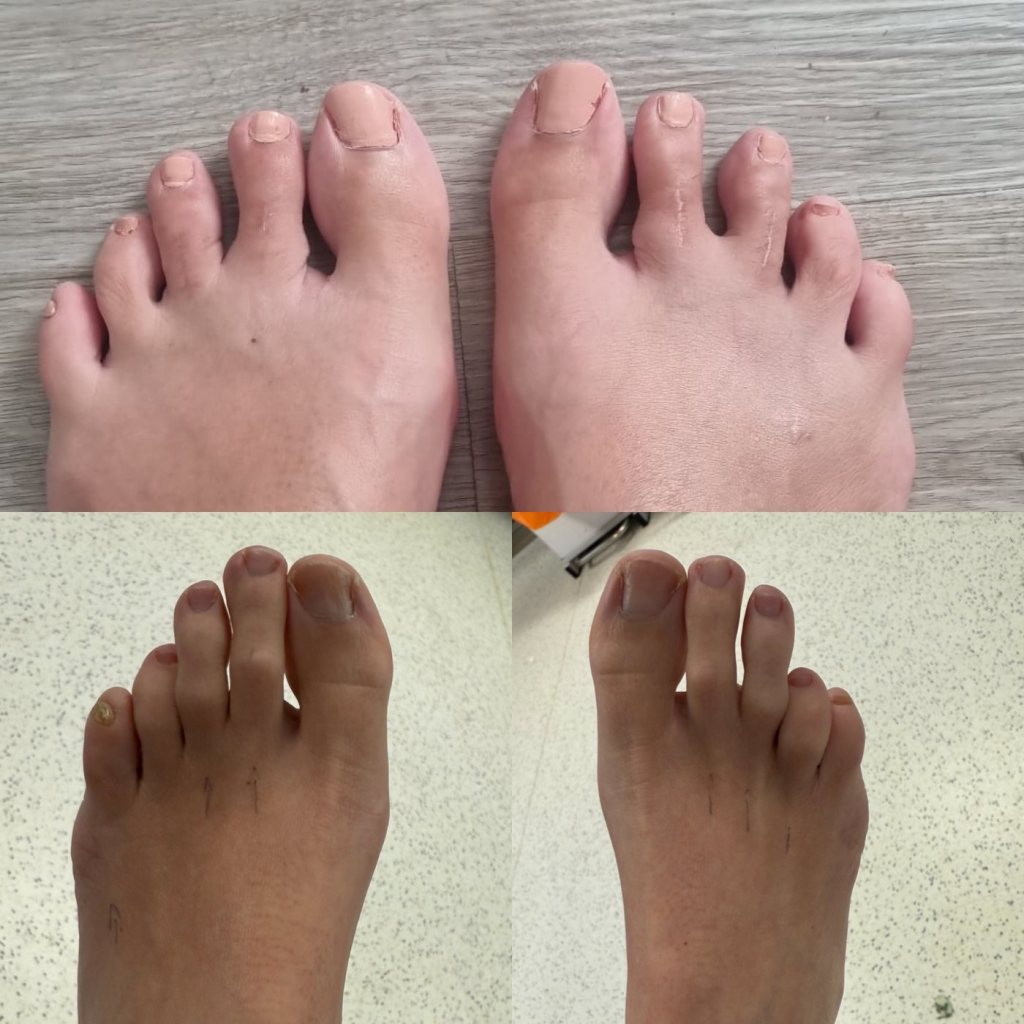
Photographs of Mr Nazir’s patients, shared with their consent. Every foot is different and individual results vary.
Hammer toe surgery and bunions
A bunion pushes the big toe towards the second toe, which often forces the second toe upwards into a hammer or crossover position. In these cases the most lasting result usually comes from correcting both together. Mr Nazir performs a high volume of keyhole bunion surgery, so combined bunion and toe correction can be carried out in one operation.
Recovery at a glance
- Day surgery – home the same day, walking in a post-operative shoe
- Weeks 0–2: rest with the foot raised
- Weeks 2–6: return to work and, depending on the technique, to trainers
- Around 6–8 weeks: most normal activities, including exercise
- Swelling continues to settle for several months
Full details: toe surgery recovery.
Risks
All surgery carries risks. For hammer toe correction these include infection, swelling that takes months to settle, stiffness, recurrence, a toe that sits slightly raised (“floating toe”), numbness near the scar, delayed bone healing and, rarely, problems with the blood supply to the toe. Mr Nazir will explain how these apply to you at consultation.
Cost and insurance
Hammer toe correction is covered by most UK private medical insurers. For self-funding patients, the fee depends on the number of toes, one or both feet, and whether implants are used. You will receive a written estimate after assessment, and finance is available. See toe surgery costs.
Hammer toe surgery FAQs
Can you straighten a hammer toe without surgery?
Splints, padding and footwear changes can relieve symptoms and may slow progression of a flexible toe, but they do not permanently straighten it. Surgery is the only way to correct the deformity.
Is hammer toe surgery painful?
The operation is done under anaesthetic, and long-acting local anaesthetic keeps the foot comfortable for many hours afterwards. Most patients manage with simple painkillers after the first few days.
Can I walk after hammer toe surgery?
Yes. You walk on the foot the same day in a protective shoe, though rest and elevation for the first two weeks give the best result.
Will the hammer toe come back?
Recurrence is uncommon when the cause – for example a tight tendon, a bunion or a damaged ligament – is corrected at the same time.
Make an enquiry
Leave your details and the team will get back to you, usually within one working day. Or book a consultation online.
Thank you for your enquiry
Your details are used only to respond to your enquiry, in line with our privacy policy. Please do not use this form for urgent medical concerns; in an emergency call 999.

