
A corn is a small, hard area of thickened skin that forms where a toe is repeatedly pressed or rubbed. Trimming and padding give temporary relief, but if the pressure comes from the shape of the toe, the corn keeps coming back. Corn removal surgery deals with the cause, so the toe stops rubbing and the corn does not return.
Types of corn on the toes
- Hard corn on top of a toe – usually over the knuckle of a hammer toe or claw toe that rubs on the shoe.
- Corn on the tip of a toe – where a mallet toe or long toe presses into the sole of the shoe.
- Soft corn between the toes – a moist, white, often very painful corn caused by two toe bones pressing against each other, most often between the fourth and fifth toes.
- Corn on the outside of the little toe – from a prominent bone rubbing on the side of the shoe, sometimes alongside a tailor’s bunion.
Under a long-standing corn there is often a small fluid sac (bursa) or a bony prominence on the toe joint, which is why the corn keeps returning.
Do I need surgery?
Many corns are well managed by a podiatrist with regular painless removal of the hard skin, protective padding, toe separators and roomier footwear. Surgery is worth considering when a corn is persistently painful, keeps coming back despite good care, makes footwear difficult, or when the toe itself is bent or prominent.
If you have diabetes, poor circulation or reduced feeling in your feet, do not cut or use acid treatments on corns yourself, and seek advice from a podiatrist.
Corn removal surgery options
Mr Nazir chooses the approach based on what is causing the pressure under your corn.
Corn and bursa excision
The full depth of the corn is removed through a small elliptical incision, together with the scar tissue and any bursa beneath it, and the skin is stitched closed. This suits a single troublesome corn where the toe is otherwise straight.
Removing the bony prominence
When a small bump of bone on the toe joint is pressing on the skin, it is smoothed away so the pressure point disappears. This is often the answer for soft corns between the toes, and it can frequently be done through a tiny keyhole incision.
Straightening or shortening the toe
Where the corn is caused by a bent or long toe – or there are several corns on one toe – correcting the toe itself gives the most lasting result. See hammer toe surgery and toe shortening surgery.
Corn surgery is day surgery, usually carried out under local anaesthetic. You walk out the same day.
Corn removal and claw toe correction: before and after
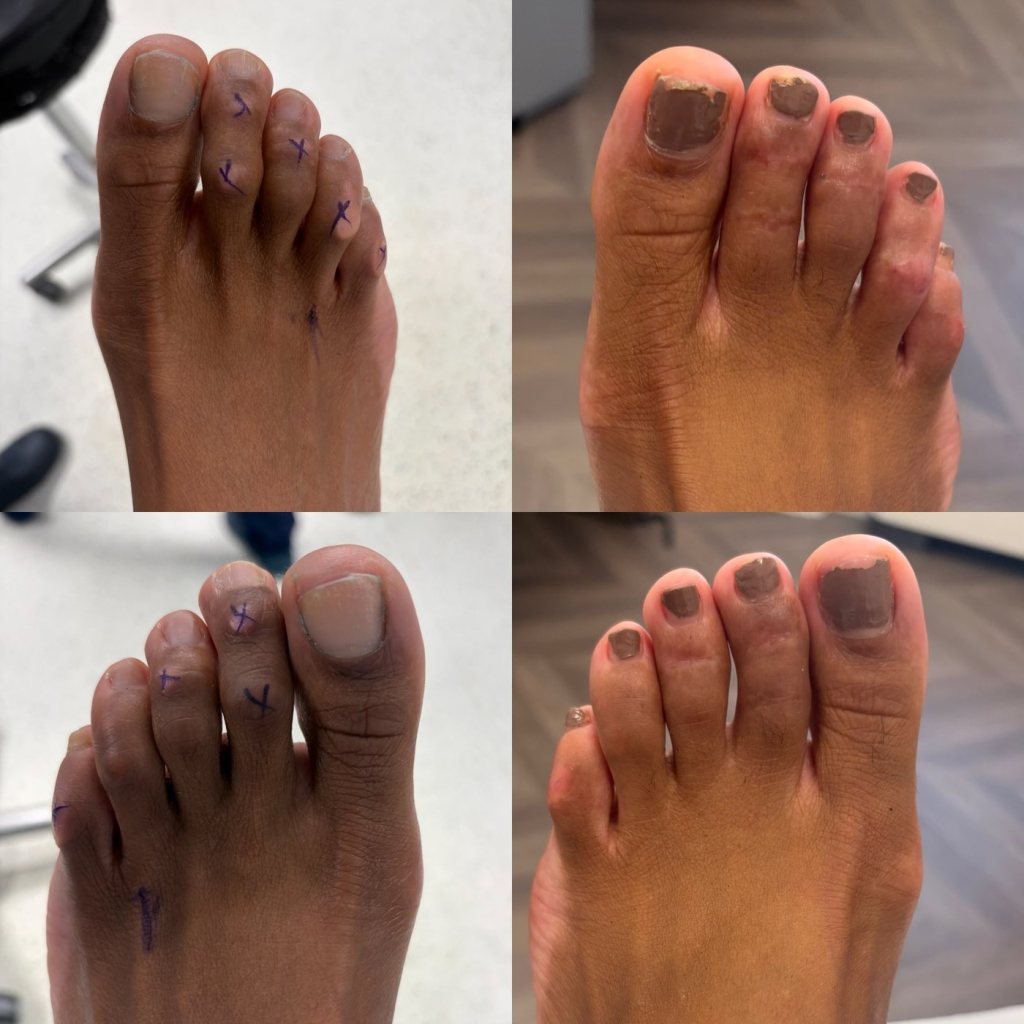
Photographs of Mr Nazir’s patients, shared with their consent. Every foot is different and individual results vary.
Recovery after corn removal
- First 48 hours: rest with the foot raised as much as possible; gentle walking is fine.
- First two weeks: keep the dressing clean and dry and wear a protective shoe; the wound is checked and stitches removed at around two weeks.
- Two to three weeks: most people are back in comfortable shoes; avoid running and high-impact exercise until then.
- If the toe is also straightened or shortened: recovery follows the toe surgery recovery guide.
Risks
Possible complications include infection, a tender or thickened scar, numbness near the scar, slow wound healing and recurrence of the corn if the underlying pressure is not fully relieved. Mr Nazir will explain which risks apply to your toe.
Cost of corn removal surgery
For self-funding patients, corn and bursa excision is typically £800 to £2,400, depending on how many corns are treated on each foot and whether a bursa is also removed. Toe straightening or shortening is priced separately. You will receive a written quote after assessment, and you can send a photo of your corns beforehand for a guide price. Treatment of a painful corn is often covered by private medical insurance. See costs and insurance.
Corn removal FAQs
Will the corn come back after surgery?
Removing the corn alone can allow it to return if the toe still rubs. That is why the bony prominence or toe position causing the pressure is corrected at the same time where needed.
Is corn removal surgery painful?
The area is numbed with local anaesthetic, so you should not feel pain during the procedure. Most patients manage afterwards with simple painkillers.
Can I have a corn removed without surgery?
Yes. A podiatrist can painlessly remove the hard skin, and padding and footwear changes help. This gives relief for several weeks, but a corn caused by the shape of the toe will usually return.
What is a soft corn between the toes?
A soft corn forms between two toes where the bones press together. Moisture keeps it white and soft. Because it comes from bone pressure, removing the small bony prominence is often the lasting fix.
Make an enquiry
Leave your details and the team will get back to you, usually within one working day. Or book a consultation online.
Thank you for your enquiry
Your details are used only to respond to your enquiry, in line with our privacy policy. Please do not use this form for urgent medical concerns; in an emergency call 999.

