
A crossover toe drifts out of line and rides over or under the toe next to it. It most often affects the second toe, which lifts and crosses over the big toe, or the little toe, which overlaps the fourth toe. The overlapping toe rubs on the shoe, forms corns and can make finding comfortable footwear difficult. Crossover toe surgery realigns the toe and corrects the cause so it stays straight.
Types of crossover and overlapping toe
- Crossover second toe – the second toe gradually lifts and drifts towards the big toe, often after the ligament under the toe joint (the plantar plate) is stretched or torn. Pain under the ball of the foot is common, sometimes before the toe moves.
- Overlapping little toe – the fifth toe sits on top of the fourth toe. This is often present from childhood, but can also develop later from tight footwear or a tailor’s bunion.
- Underlapping toe – a toe curls underneath its neighbour, usually the third, fourth or fifth toe, and can cause corns on the tip or side of the toe.
What causes a crossover toe?
- a stretched or torn plantar plate under the base of the toe
- a bunion pushing the big toe across, crowding the second toe
- a long second toe or long metatarsal bone overloading the joint
- an untreated hammer toe or claw toe
- inflammatory arthritis affecting the toe joints
- a toe position present from birth, particularly for an overlapping little toe
Non-surgical treatment
In the early stages, taping or splinting the toe, a wider and deeper toe box, insoles to off-load the ball of the foot and padding over corns can ease symptoms and may slow the drift. Once the toe has crossed over and become stiff, these measures relieve pressure but will not bring the toe back into line.
Crossover toe surgery
Mr Nazir plans the operation around what is pulling the toe out of position. Depending on the toe, surgery may combine:
- release of the tight tendons and joint capsule holding the toe in the wrong position
- repair of the plantar plate ligament to hold the toe down and straight
- a tendon transfer to stabilise the toe at its base
- a small shortening of the metatarsal bone when a long bone is overloading the joint
- straightening of the toe itself if it has also developed a hammer or claw position
- for an overlapping little toe, releasing the tight tissues and reshaping the skin so the toe can sit flat beside the fourth toe
Where a bunion is the driving force, correcting the bunion at the same time gives the most lasting result, and Mr Nazir’s keyhole bunion technique allows both to be done in one operation. Suitable toes can also be treated with keyhole toe surgery.
Crossover toe before and after
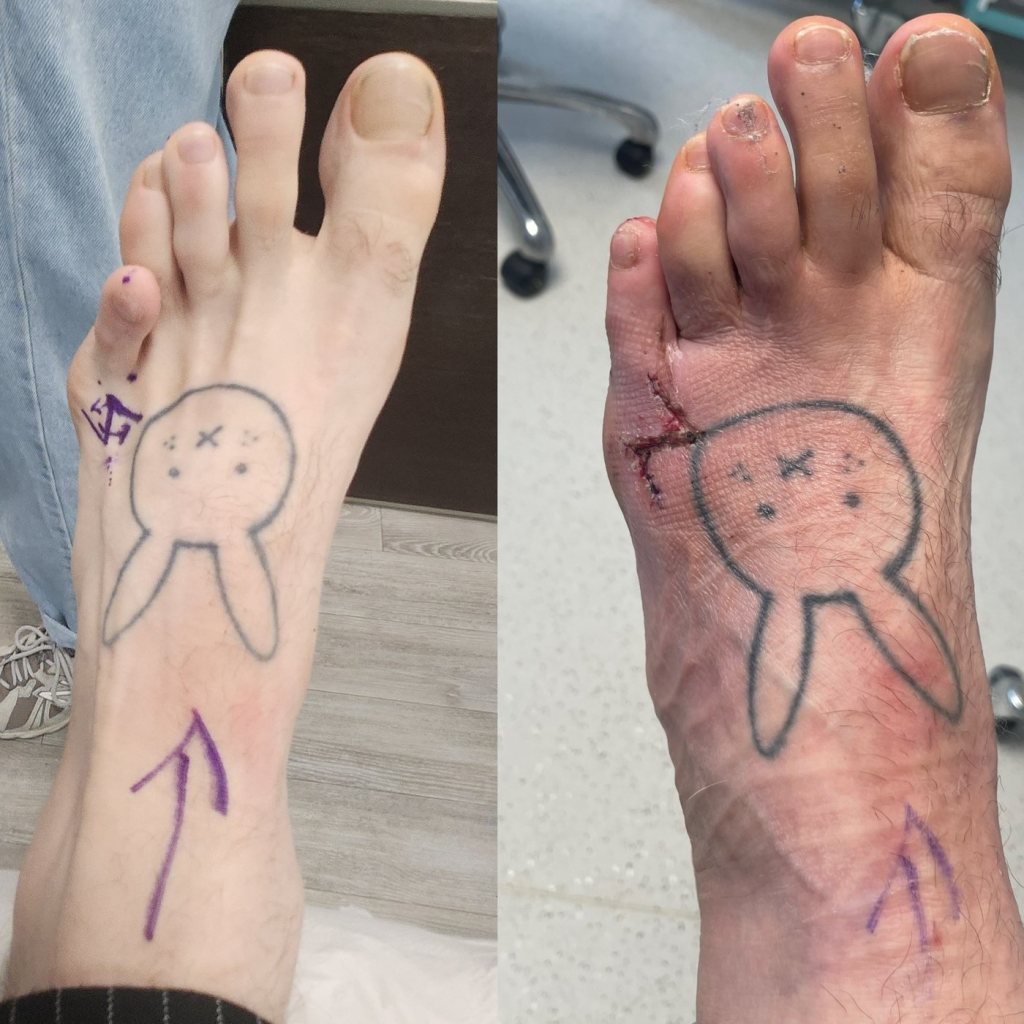
Photographs of Mr Nazir’s patients, shared with their consent. Every foot is different and individual results vary.
Recovery
- Day surgery – you walk out the same day in a protective post-operative shoe.
- Weeks 0–2: rest with the foot raised; the toe is strapped in its new position.
- Weeks 2–6: stitches are removed and the toe is usually splinted or taped while the repair heals; most people return to work and trainers in this period, depending on the procedure.
- 6 weeks onwards: a gradual return to exercise, with swelling settling over several months.
See the full toe surgery recovery guide.
Risks
Possible complications include infection, prolonged swelling, stiffness, the toe drifting again, a toe that sits slightly raised (“floating toe”), numbness near the scar and delayed healing. Mr Nazir will explain which risks apply to your toe at consultation.
Cost and insurance
Correction of a painful crossover toe is generally covered by UK private medical insurers. For self-funding patients, the fee depends on the procedures needed and whether a bunion is corrected at the same time. You will receive a written estimate after assessment. See toe surgery costs.
Crossover toe FAQs
Can a crossover toe be fixed without surgery?
Taping, splints and footwear can help in the early stages and ease pain, but a toe that has fully crossed over and stiffened will not return to a straight position without surgery.
Will the toe cross over again after surgery?
Recurrence is less likely when the cause, such as a torn plantar plate, a long metatarsal or a bunion, is corrected at the same operation.
Can an overlapping little toe be corrected in adults?
Yes. Even when the little toe has overlapped since childhood, releasing the tight tissues and reshaping the skin can allow it to sit flat beside the fourth toe.
Can crossover toe and bunion surgery be done together?
Often, yes. Correcting both in one operation means a single recovery and treats the bunion that is pushing the second toe out of line.
Make an enquiry
Leave your details and the team will get back to you, usually within one working day. Or book a consultation online.
Thank you for your enquiry
Your details are used only to respond to your enquiry, in line with our privacy policy. Please do not use this form for urgent medical concerns; in an emergency call 999.

